Made in Grand RapidsTimeline of things made

Furniture City and beyond · 1876 — today

Made here.

Grand Rapids learned to read wood, then steel, then the way people sit, work and live. This is a running record of the things designed and built here — the famous, the forgotten and the everyday.

Berkey & Gay Furniture Co.
·
Grand Rapids

Renaissance Revival at the Centennial

Furniture City goes national

Berkey & Gay grew from a sash-and-door mill William Berkey opened in Grand Rapids in 1855. At the 1876 Centennial Exposition in Philadelphia, the firm showed heavily carved Renaissance Revival pieces that drew national attention and fixed the city's reputation for quality furniture. Soon the words "Grand Rapids" were a selling point of their own.

1876
Renaissance Revival at the Centennial
Illustrative photo, not a Berkey & Gay workshop. Photo: Ries Bosch / Unsplash.

Berkey & Gay's carved Renaissance Revival furniture at Philadelphia's Centennial Exposition put Grand Rapids on the national furniture map.

Source ↗
Julius Berkey
julius-berkey
Co-founder, Berkey & Gay
George W. Gay
george-w-gay
Co-founder, Berkey & Gay
Melville R. Bissell
·
Grand Rapids

The Bissell Carpet Sweeper

A crockery shop's cleanup

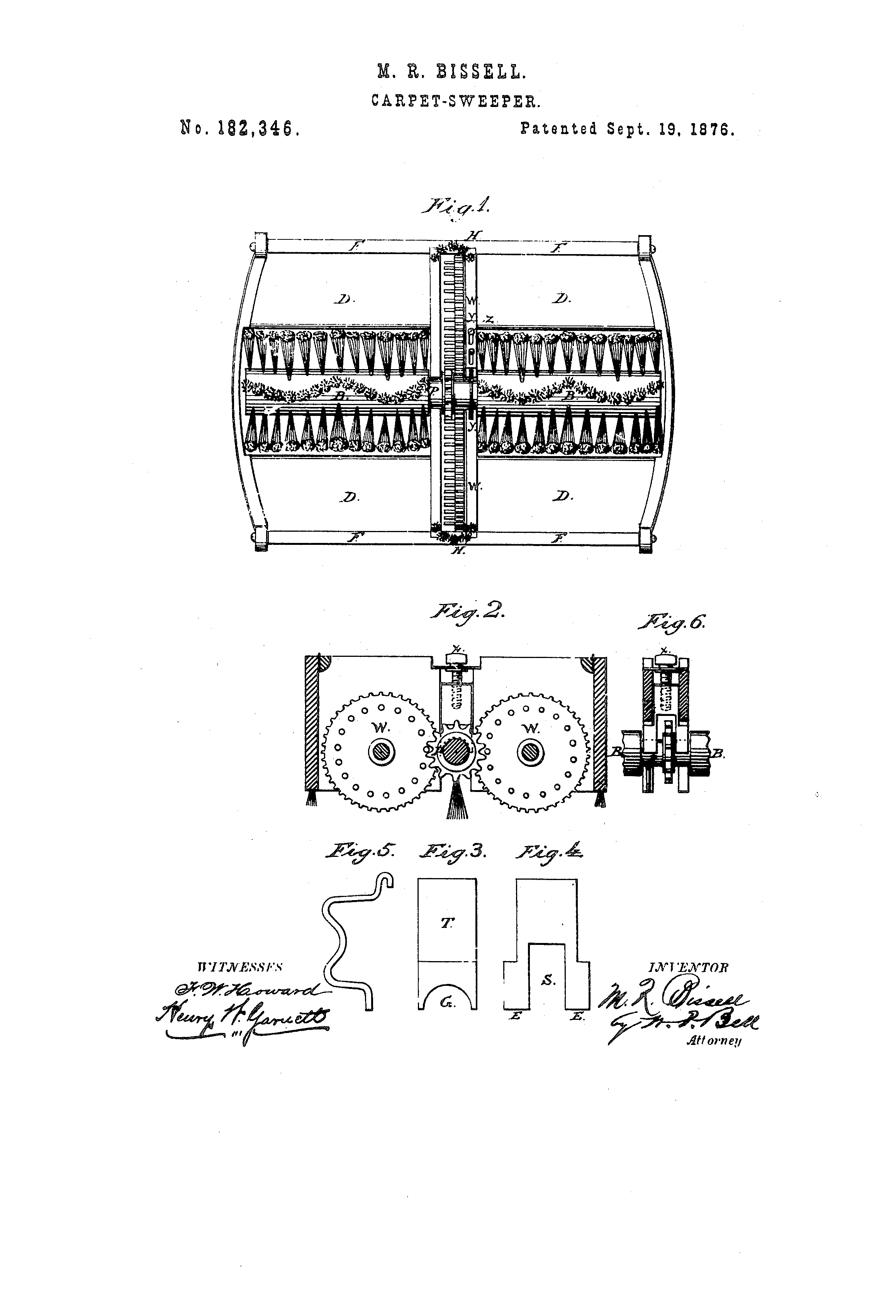
Sawdust and straw from packing crates kept getting ground into the carpet of Melville and Anna Bissell's Grand Rapids crockery shop. Melville's fix was a push sweeper with bristle rollers, patented in September 1876. A factory followed in 1883, and after Melville's death in 1889 Anna ran the company and took it international.

1876
The Bissell Carpet Sweeper
Melville R. Bissell, U.S. Patent 182,346, Sept. 19, 1876. Public domain.

Grand Rapids crockery dealer Melville Bissell patented a carpet sweeper in September 1876, launching one of America's best-known cleaning brands.

Source ↗
Melville R. Bissell
melville-bissell
Inventor
Anna Sutherland Bissell
anna-bissell
Chief executive
Grand Rapids Refrigerator Co.
·
Grand Rapids

The Leonard Cleanable Refrigerator

An icebox you could scrub

Iceboxes of the era soaked up meltwater and spills in fixed interiors. Charles H. Leonard's design used removable liners and flues. His Grand Rapids company added metal shelves in 1885 and porcelain interiors in 1907 before moving to electric models, and by 1925 it claimed one in five American refrigerators.

1882
The Leonard Cleanable Refrigerator

Charles Leonard's icebox had removable linings and flues, so households could finally clean the inside.

Source ↗
Charles H. Leonard
charles-h-leonard
Inventor & founder
Valley City Milling Co.
·
Grand Rapids (Michigan Street NW)

Lily White Flour

Flour from the falls

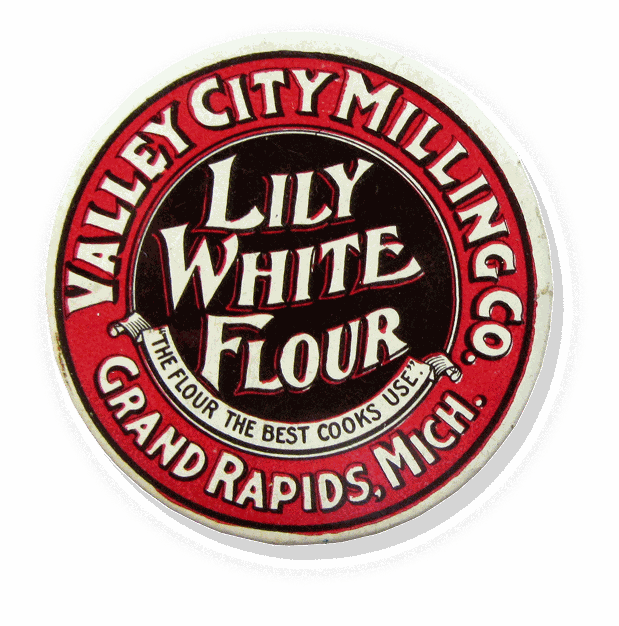
William N. Rowe, Conrad G. Swensberg, M. S. Crosby and R. M. Lawrence founded the Valley City Milling Company in 1884, milling flour by the Grand River. Lily White became its flagship flour and Rowena its feed line, with horse feed from 1893 and dog food from 1931. After a 1923 fire destroyed the Grand Rapids mill the company moved to Portland, Michigan, and kept milling flour until 1970.

1884
Lily White Flour
Valley City Milling Co. advertising button for Lily White Flour, “The flour the best cooks use.”

Valley City Milling, founded in Grand Rapids in 1884, sold Lily White flour and Rowena feeds across Michigan for nearly a century.

Source ↗
William N. Rowe
william-n-rowe
Co-founder, Valley City Milling
Grand Rapids School Furniture Co.
·
Grand Rapids

The Grand Rapids School Desk

Seating a nation

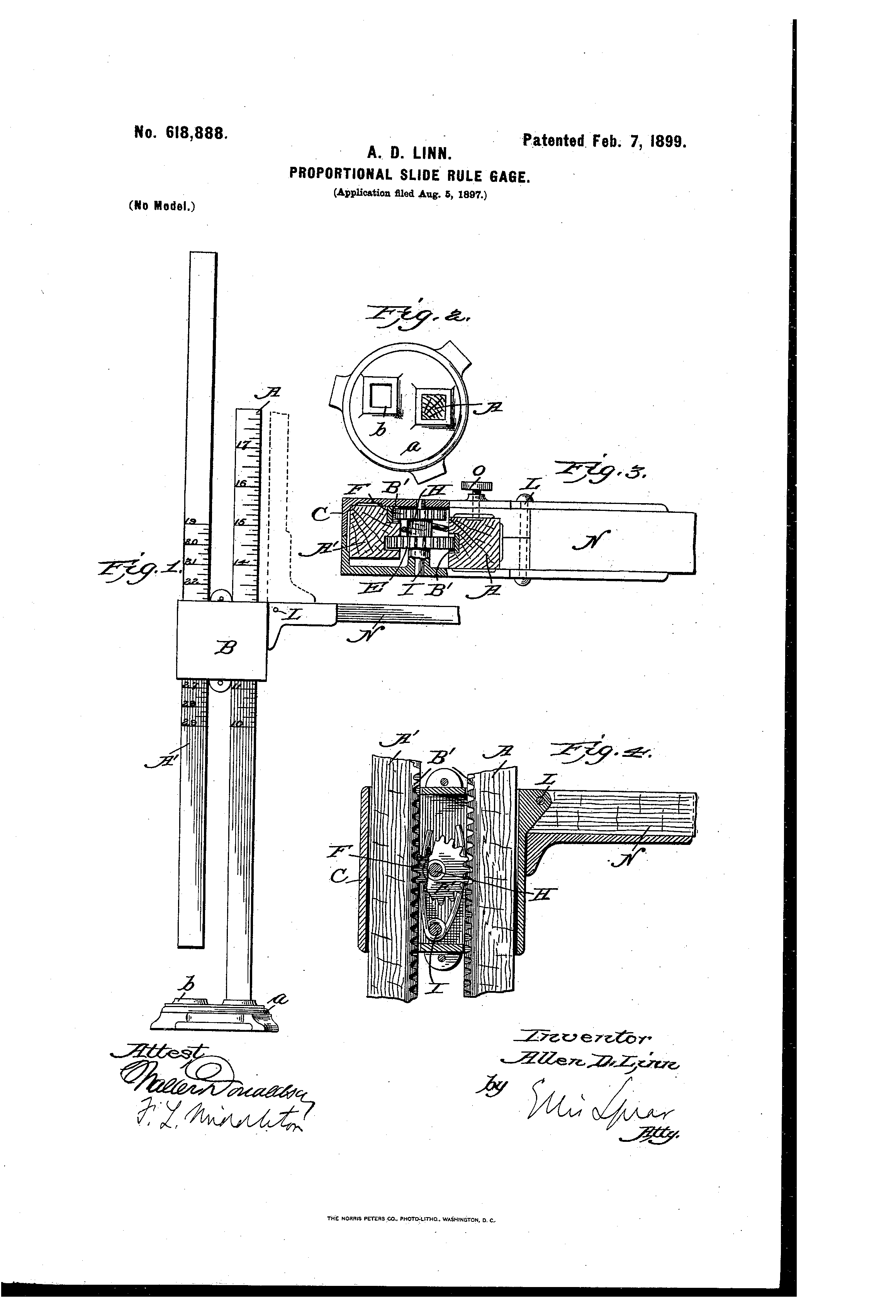
Local businessmen organized the Grand Rapids School Furniture Company in late 1885 and started making desks the next year; output passed 65,000 a year by 1888. After a merger it became American Seating, which went on to build theater chairs, ballpark seats including Fenway Park's in 1912, and bus seating.

1886
The Grand Rapids School Desk
Desk-sizing gauge by Allen D. Linn for the Grand Rapids School Furniture Co., U.S. Patent 618,888, 1899. Public domain.

A school-desk maker began production in 1886 and grew into American Seating, which seated classrooms, theaters and ballparks.

Source ↗
Allen D. Linn
allen-d-linn
Inventor
Grand Rapids Cycle Co.
·
Grand Rapids

The Clipper Bicycle

Bicycle boom on the Grand

Grand Rapids had as many as six bicycle makers in the 1890s, and the Grand Rapids Cycle Company was the best known. Its Clipper bicycles reached buyers as far away as Finland and South Africa. The firm joined the American Bicycle Company trust in 1899, and bicycle making in the city ended soon after.

1890
The Clipper Bicycle
Illustrative photo, not a Clipper. Photo: Kiwihug / Unsplash.

The Grand Rapids Cycle Company built Clipper bicycles from 1890 and shipped them worldwide during the 1890s cycling craze.

Source ↗
Oliver Machinery Co.
·
Grand Rapids (Clancy Avenue NE)

Oliver Woodworking Machines

Tools for Furniture City

Joseph W. Oliver had worked for W. R. Fox, inventor of the universal trimmer, a precision miter-cutting machine. Around 1890 he took over a rival trimmer venture in Grand Rapids and built it into the American Machinery Company, later the Oliver Machinery Company. The firm added jointers, band saws and other heavy machines for furniture factories and moved into a new Clancy Street plant in 1907. Oliver machines, cast heavy and built to last, are still sought out and restored by woodworkers today.

1890
Oliver Woodworking Machines

Joseph Oliver's company built trimmers, jointers and saws in Grand Rapids that many still call the finest woodworking machines ever made.

Source ↗
Joseph W. Oliver
joseph-w-oliver
Founder, Oliver Machinery
Hekman Biscuit Co.
·
Grand Rapids (Grandville Avenue SW)

Hekman Biscuits

From a baby buggy to Keebler

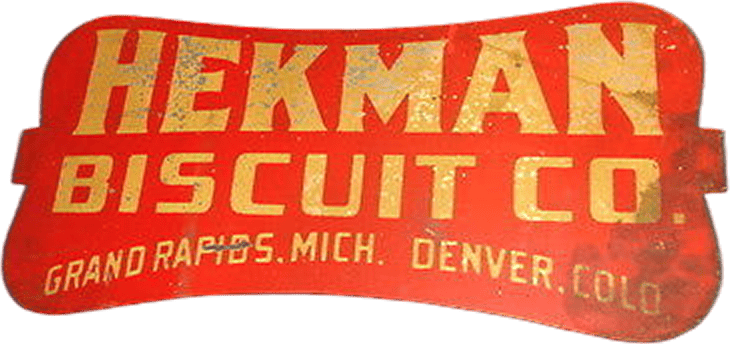
Edsko and Hendrikje Hekman baked cookies in their rented house on Vries Street in 1893 and sent the children out to deliver them by baby buggy, then by horse and wagon. By the 1900s the business ran a factory on Grandville Avenue as the Hekman Biscuit Company. It joined the United Biscuit Company of America in 1927–28, moved into a $2.5 million Art Deco bakery on 28th Street in 1949 and took the Keebler name in 1966. The same plant baked the first Pop-Tarts.

1893
Hekman Biscuits
Hekman Biscuit Co. metal sign.

Dutch baker Edsko Hekman's home-baked cookies grew into the Hekman Biscuit Company, whose Grand Rapids bakery became a Keebler plant.

Source ↗
Edsko Hekman
edsko-hekman
Founder, Hekman Biscuit Co.
Grand Rapids Brewing Co.
·
Grand Rapids (Michigan Street and Ionia Avenue)

Silver Foam Beer

Six breweries, one beer

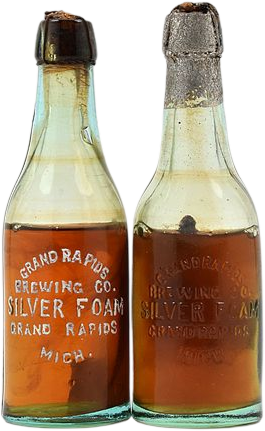
Christoph Kusterer's City Brewery of 1849 was the oldest of six breweries that combined in 1893 as the Grand Rapids Brewing Company, with his son Charles F. Kusterer as president. Its Silver Foam brand was on sale by 1918 and survived Prohibition as a soft drink made by the renamed Grand Rapids Products Co. Beer returned in 1934, and the plant brewed under later names until 1951. Today's Grand Rapids Brewing Co. revived the name in 2012.

1893
Silver Foam Beer
Grand Rapids Brewing Co. Silver Foam bottles.

Six Grand Rapids breweries merged in 1893 into the Grand Rapids Brewing Company, whose Silver Foam became the city's beer.

Source ↗
Christoph Kusterer
christoph-kusterer
Brewer, City Brewery
Charles F. Kusterer
charles-f-kusterer
President, Grand Rapids Brewing Co.
Gordon Food Service
·
Grand Rapids

Gordon Food Service

Butter and eggs, delivered

Isaac Van Westenbrugge was 23 when he borrowed $300 from his brother and began delivering butter and eggs around Grand Rapids. In 1914 he ran the city's first motorized delivery truck. Ben Gordon joined at 16 in 1916, married Isaac's daughter Ruth, and in 1942 reorganized the business with his brother Frank as Gordon Food Service. Still family-owned and based in Wyoming, Michigan, it supplies restaurants, schools and hospitals across North America.

1897
Gordon Food Service
Illustrative photo. Photo: Peter Werkman / Unsplash.

A $300 butter-and-egg route started in 1897 grew into North America's largest family-run foodservice distributor.

Source ↗
Isaac Van Westenbrugge
isaac-van-westenbrugge
Founder, Gordon Food Service
Ben Gordon
ben-gordon
Co-founder, Gordon Food Service
Stickley Brothers Co.
·
Grand Rapids

Quaint Arts & Crafts Furniture

Mission style, mass-made

Albert Stickley founded Stickley Brothers in Grand Rapids in 1891, separate from his brothers' New York shops. Around 1900 the firm turned to plain oak Mission designs and in 1902 began selling them under the Quaint name, producing Arts & Crafts furniture at a larger scale than the other Stickley companies.

1902
Quaint Arts & Crafts Furniture
Illustrative photo, not Stickley Brothers furniture. Photo: Toa Heftiba / Unsplash.

Albert Stickley's Grand Rapids firm launched its Quaint Arts & Crafts line, putting Mission-style furniture within wide reach.

Source ↗
Albert Stickley
albert-stickley
Founder, Stickley Brothers
Michigan Wheel
·
Grand Rapids

Michigan Wheel Propellers

Props for the world's boats

Michigan Wheel started in 1903 as a machine shop making metal products, propellers among them. By 1934 it made nothing but marine propellers, grew quickly supplying the military in World War II, then rode the postwar boom in recreational boating. Its engineers patented new designs, such as Eldon Lorenz's flow-through outboard propeller that routes exhaust through the hub. The company still makes propellers on Buchanan Avenue SW.

1903
Michigan Wheel Propellers
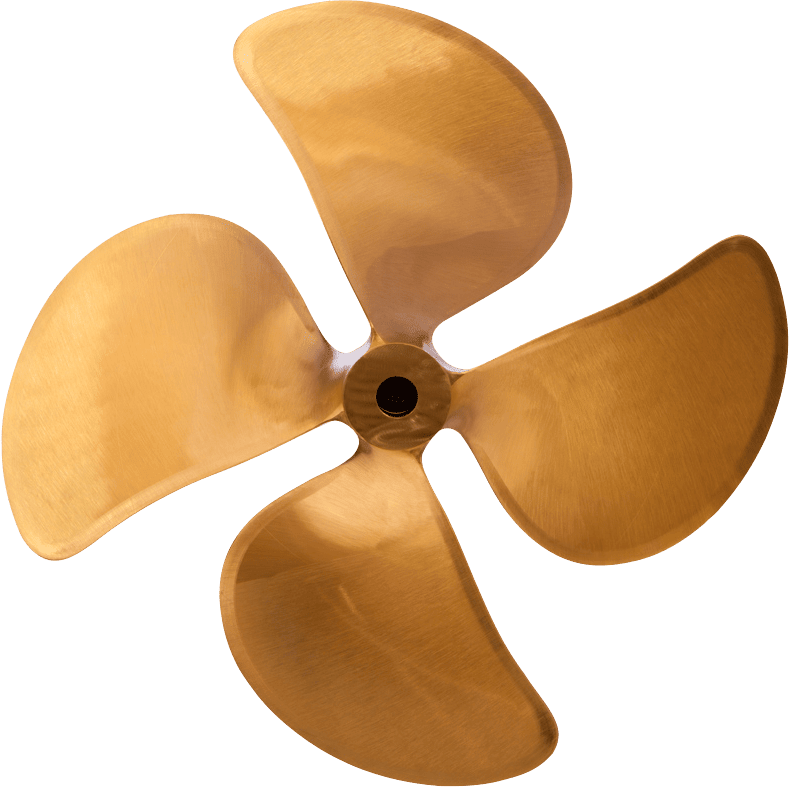
Four-blade bronze propeller. Photo: Michigan Wheel.

A Grand Rapids machine shop founded in 1903 turned to marine propellers and became one of the world's leading propeller makers.

Source ↗
Eldon L. Lorenz
eldon-l-lorenz
Inventor, Michigan Wheel
Austin Automobile Co.
·
Grand Rapids

The Austin Highway King

Grand Rapids' luxury car

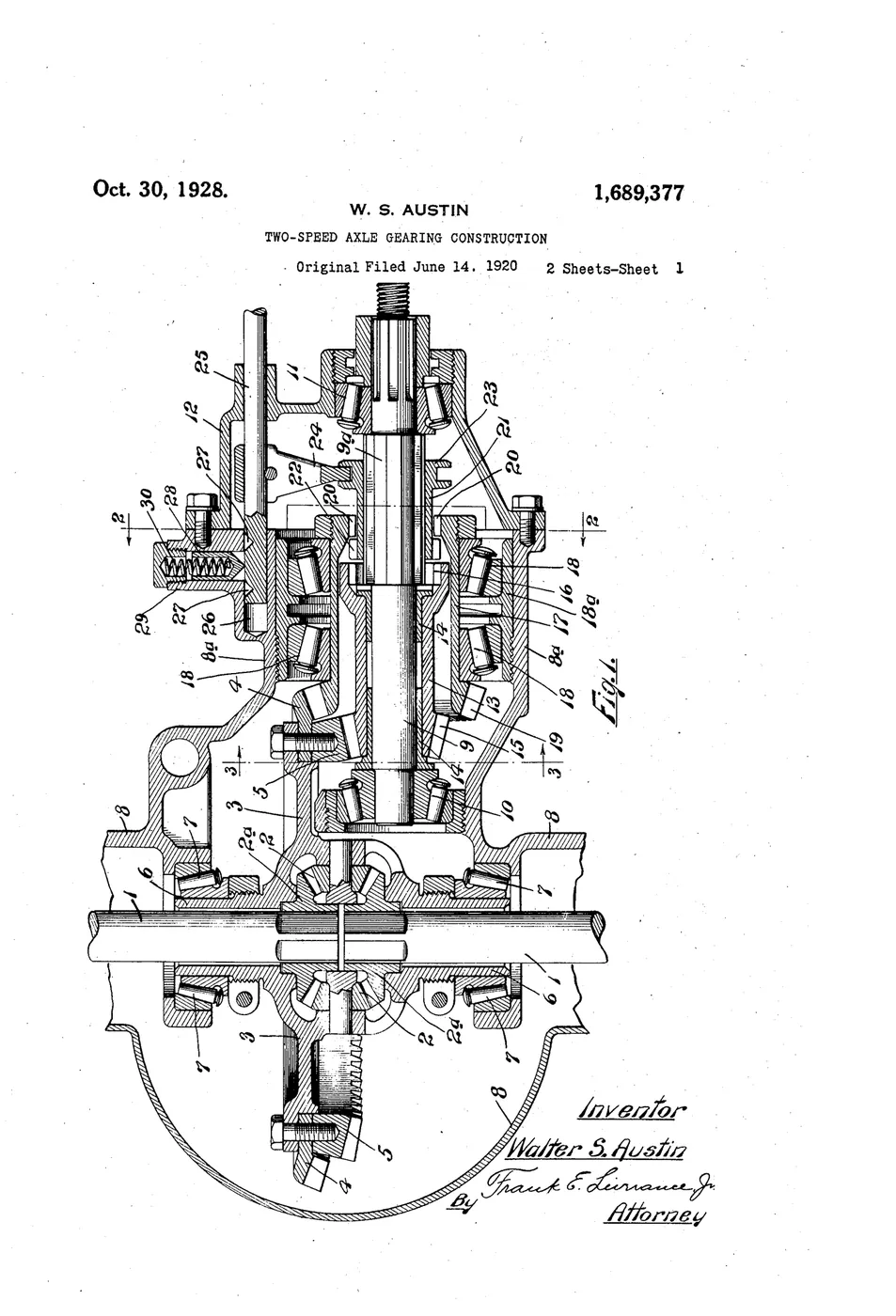
James E. Austin bought into Michigan Iron Works in 1900, and his son Walter finished the first Austin car in 1902. Production began in 1903 with a two-cylinder model and grew to sixes by 1907 and a V-12 by 1917, on wheelbases up to 142 inches. The company called its car the Highway King. In 1913 Walter's two-speed rear axle gave the Austin an overdrive for cruising, just ahead of Cadillac. Fewer than a thousand were built before the postwar slump closed the firm in 1920.

1903–20
The Austin Highway King
Walter S. Austin, two-speed axle-gearing construction, U.S. Patent 1,689,377 (filed 1920). Public domain.

Lumber dealer James Austin and his son Walter built big, powerful touring cars in Grand Rapids from 1903 to 1920.

Source ↗
Walter S. Austin
walter-s-austin
Engineer, Austin Automobile Co.
James E. Austin
james-e-austin
Founder, Austin Automobile Co.
John Thomas Batts, Inc.
·
Grand Rapids (Monroe Avenue)

The Wishbone Hanger

The shape of every closet

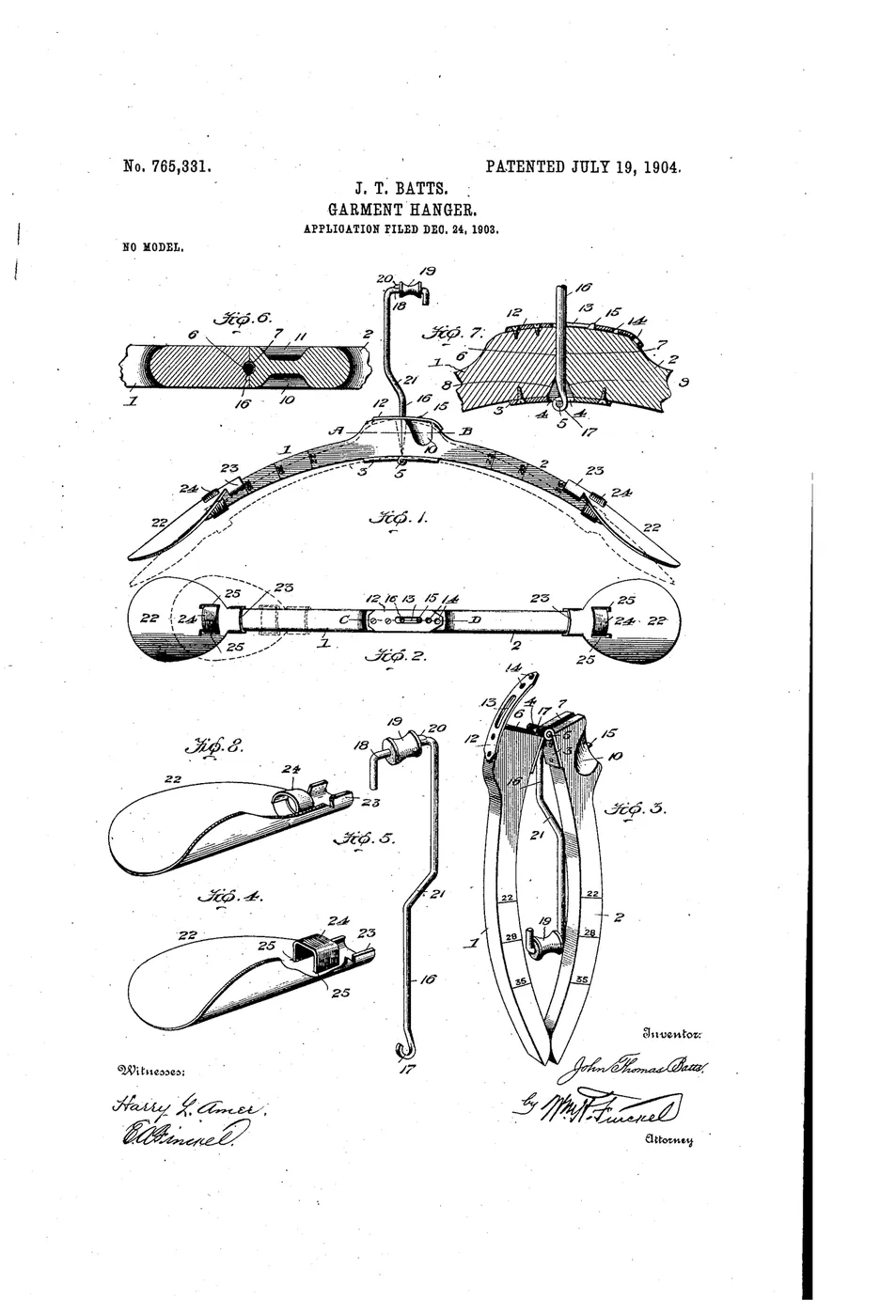
Store clothes were once stacked on tables and refolded after every customer. John Thomas Batts, who made store fixtures in Grand Rapids, designed a wooden hanger shaped like a pair of shoulders so a suit could be held up and seen as it would hang on a man. He filed the patent on December 24, 1903, and it was granted on July 19, 1904. In 1906 Meyer May's clothing store downtown became the first retailer in the country to display its stock on the hangers. Batts' firm at 710 Monroe Avenue grew into the nation's leading maker of wooden hangers and wardrobe fixtures, later adding metal and plastic hangers from a plant in Zeeland; the wishbone shape stayed in production for the next century.

1904
The Wishbone Hanger
John Thomas Batts, garment hanger, U.S. Patent 765,331 (filed Dec. 24, 1903, granted July 19, 1904). Public domain.

John Thomas Batts patented the curved wooden “wishbone” hanger in Grand Rapids in 1904; two years later Meyer May's store was the first to hang its clothes on it.

Source ↗
John Thomas Batts
john-thomas-batts
Inventor of the wishbone hanger
Meyer May
meyer-may
Clothier
Soules Motor Car Co.
·
Grand Rapids

The Soules Automobile

Furniture City's early cars

Like dozens of early carmakers, Soules tried its luck in a brand-new industry, building passenger cars and light delivery trucks in Grand Rapids until 1908. It showed the city's metal and wood skills reaching past furniture, even as Detroit came to dominate American automaking.

1905
The Soules Automobile

From 1905 to 1908 the Soules Motor Car Company built cars and light delivery trucks in Grand Rapids.

Source ↗
Metal Office Furniture Co. (Steelcase)
·
Grand Rapids

The Victor Fireproof Wastebasket

Steel beats smoldering ash

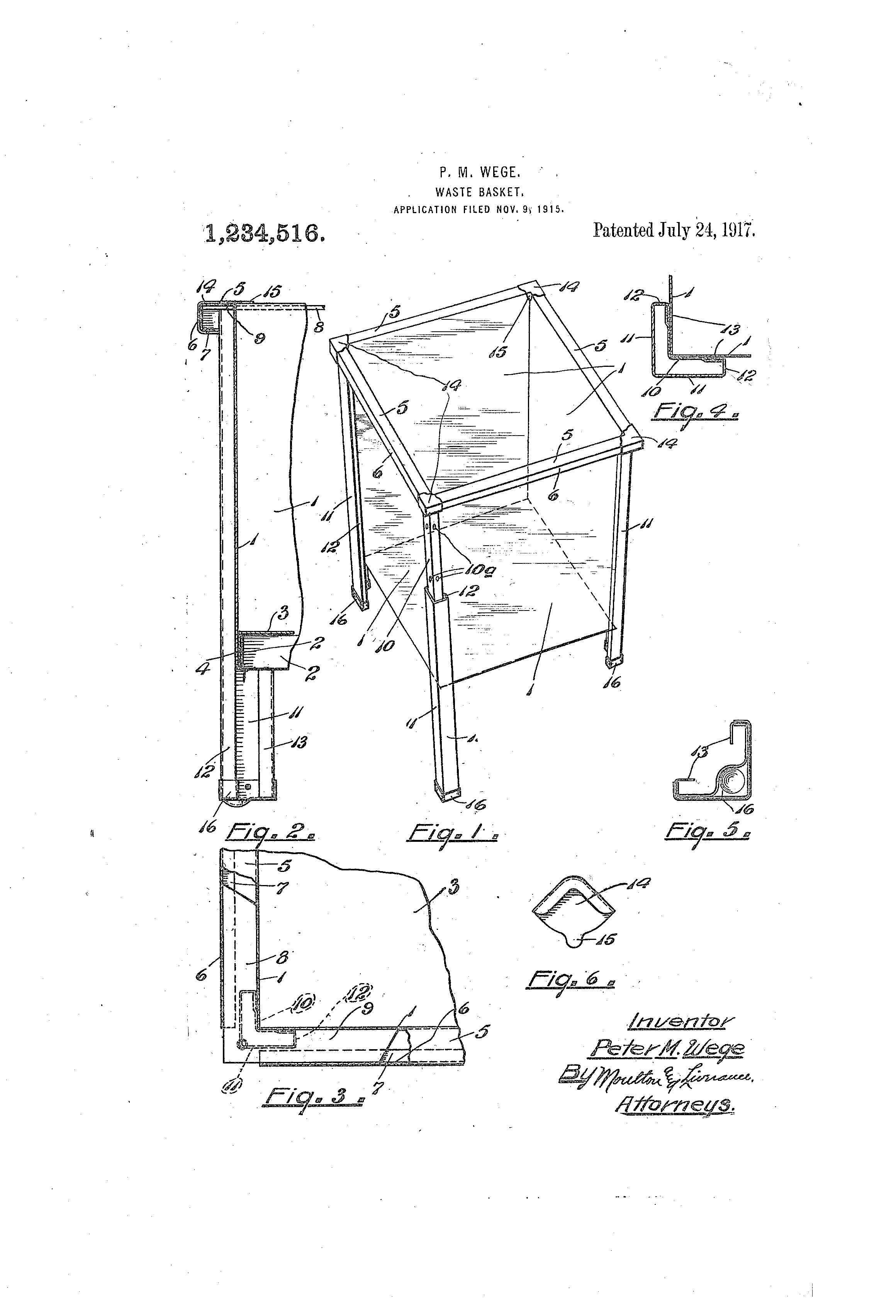
Peter Wege founded the Metal Office Furniture Company in Grand Rapids in 1912, betting steel would replace wood in the office. Its breakthrough, the Victor, was a light steel wastebasket for workplaces where ash often started fires. The company registered the Steelcase name in 1921.

1914
The Victor Fireproof Wastebasket
Peter M. Wege for Metal Office Furniture Co., waste-basket, U.S. Patent 1,234,516 (filed 1915). Public domain.

Steelcase's first hit was a lightweight steel wastebasket that would not catch fire from discarded cigar ash.

Source ↗
Peter M. Wege
peter-m-wege
Founder & inventor
Wolverine Shoe & Tanning Corp.
·
Rockford (Greater Grand Rapids)

Wolverine 1000 Mile Boot

A thousand miles of wear

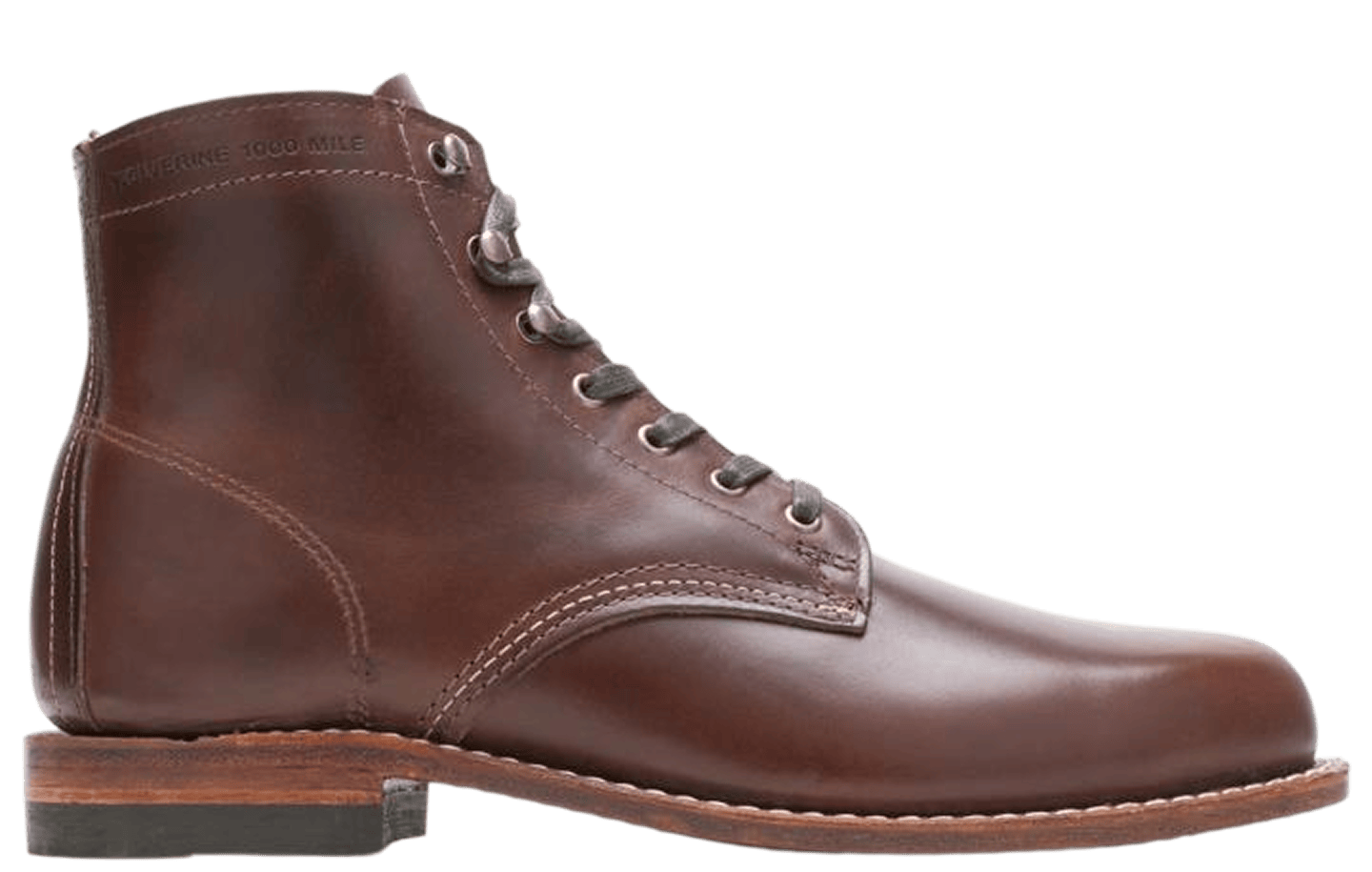
G.A. Krause started Wolverine as a Grand Rapids leather shop in 1883 and moved production to Rockford, where his factory was making nearly 300 pairs a day by 1903. In 1909 his son Victor learned how to tan shell horsehide, a leather thought too stiff to use, into something supple and nearly indestructible. The boot built from it in the 1910s carried a plain promise in its name: 1,000 miles of wear. Reissued in 2009 with Horween Chromexcel leather and Goodyear-welt construction, the 1000 Mile is still made in the U.S. and is Wolverine's flagship.

1914
Wolverine 1000 Mile Boot
Wolverine 1000 Mile Boot. Photo: Wolverine.

Wolverine's horsehide work boot promised 1,000 miles of wear, and the company still makes it in the United States a century on.

Source ↗
G.A. Krause
g-a-krause
Founder, Wolverine
Victor Krause
victor-krause
Tanning innovator
Ferris Coffee & Nut Co.
·
Grand Rapids (West Side)

Ferris Coffee

The city's original roaster

Peter Joshua Ferris ran one of America's early coffee roasting operations in Buffalo around 1860; his son Jay Floyd Ferris carried the trade to West Michigan, selling coffee, tea and spices, four pounds for a dollar, delivered anywhere in Michigan. The firm was established as Ferris Coffee & Nut Co. in 1924 and later moved into specialty-grade coffee and premium nuts, now shipped to all 50 states from its Grand Rapids roastery.

1924
Ferris Coffee
Illustrative photo, not Ferris coffee. Photo: Anastasiia Chepinska / Unsplash.

Ferris has roasted coffee in Grand Rapids since the late 1800s and was formally established as Ferris Coffee & Nut Co. in 1924.

Source ↗
Jay Floyd Ferris
jay-floyd-ferris
Coffee roaster, Ferris
Koeze Co.
·
Grand Rapids (Burlingame Avenue SW)

Cream-Nut Peanut Butter

Still ground on the same machines

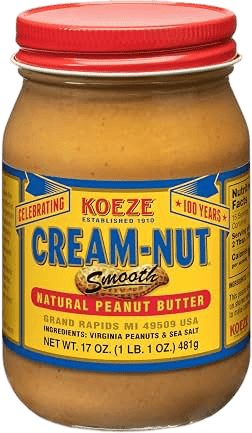
Sibbele Koeze, a Dutch immigrant, started a produce business in Grand Rapids in 1910. In 1925 the company began grinding peanuts into peanut butter; a century later the family's third generation still makes Cream-Nut, just peanuts and salt, on the same equipment. Chocolate confections were added in 1977, and the company sells from two Grand Rapids stores and by catalog.

1925
Cream-Nut Peanut Butter
Koeze Cream-Nut Smooth Natural Peanut Butter. Photo: Koeze Co.

Koeze began making peanut butter in 1925 and still grinds Cream-Nut in Grand Rapids on the original equipment.

Source ↗
Sibbele Koeze
sibbele-koeze
Founder, Koeze Co.
Knape & Vogt
·
Grand Rapids

Adjustable Shelf Standards

The slotted shelf system

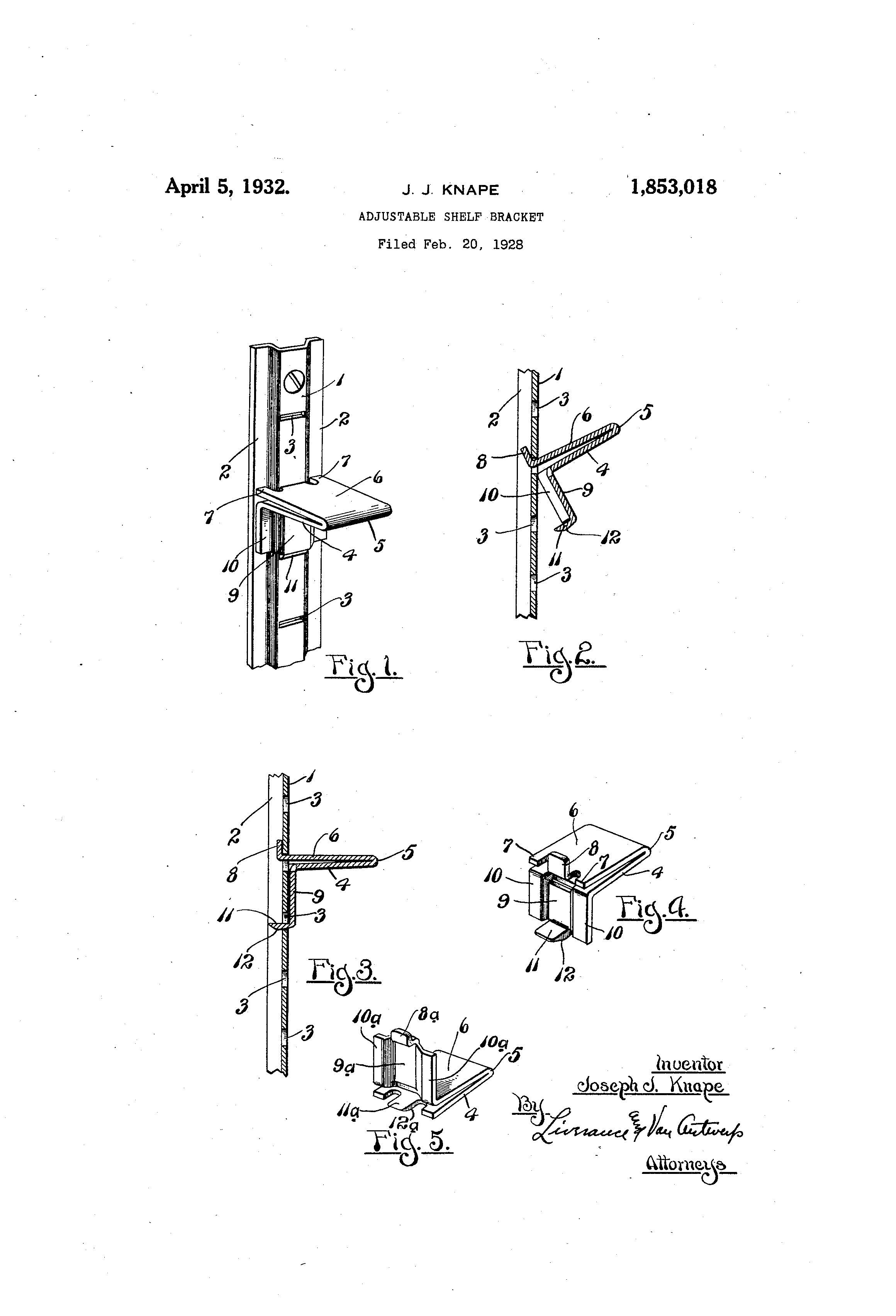
Knape & Vogt began in Grand Rapids in 1898 making tools and then hardware for local furniture factories. In 1934 Joseph J. Knape patented adjustable shelf standards: slotted metal strips with brackets that clip in at any height. The idea became a fixture of store displays and household closets.

1934
Adjustable Shelf Standards
Joseph J. Knape for Knape & Vogt, adjustable shelf bracket, U.S. Patent 1,853,018 (filed 1928). Public domain.

Joseph Knape patented slotted shelf standards and clip-in brackets in 1934, a system still found in stores and homes.

Source ↗
Joseph J. Knape
joseph-j-knape
Inventor
John Knape
john-knape
Co-founder, Knape & Vogt
Englebert Vogt
englebert-vogt
Co-founder, Knape & Vogt
Metal Office Furniture Co. (Steelcase)
·
Grand Rapids

Frank Lloyd Wright's Johnson Wax Desk

Streamlined steel

Wright designed the furniture along with the building, with rounded forms that echo its curves. The Grand Rapids steel company turned his drawings into production pieces, proving steel office furniture could also be high design. An example is in the collection of the Art Institute of Chicago.

1937
Frank Lloyd Wright's Johnson Wax Desk

Steelcase built Frank Lloyd Wright's curved steel desks and chairs for the S.C. Johnson headquarters in Racine.

Source ↗
Frank Lloyd Wright
frank-lloyd-wright
Architect & designer
Widdicomb Furniture Co.
·
Grand Rapids

Robsjohn-Gibbings for Widdicomb

Mid-century, Grand Rapids-made

Widdicomb traced its roots to an 1858 Grand Rapids cabinet shop. From 1943 to 1956 it produced the pale woods and restrained forms of T.H. Robsjohn-Gibbings, moving a traditional maker into mid-century modern and paving the way for its later work with George Nakashima.

1943
Robsjohn-Gibbings for Widdicomb
T.H. Robsjohn-Gibbings lounge chair for Widdicomb.

Designer T.H. Robsjohn-Gibbings created clean-lined modern furniture that Widdicomb built in Grand Rapids.

Source ↗
T.H. Robsjohn-Gibbings
th-robsjohn-gibbings
Designer
Steelcase
·
Grand Rapids

The Multiple 15 Desk

The office, standardized

Offices of the 1940s were full of mismatched desks. Steelcase's Multiple 15 program built tops and components in multiples of 15 inches so pieces could line up and be reconfigured. The standard spread across the industry and led to later modular office systems.

1949
The Multiple 15 Desk

Steelcase sized desks in 15-inch increments, a module the whole industry adopted and the root of modular office furniture.

Source ↗
Lear, Inc.
·
Grand Rapids

Lear F-5 Autopilot

Letting the jet fly itself

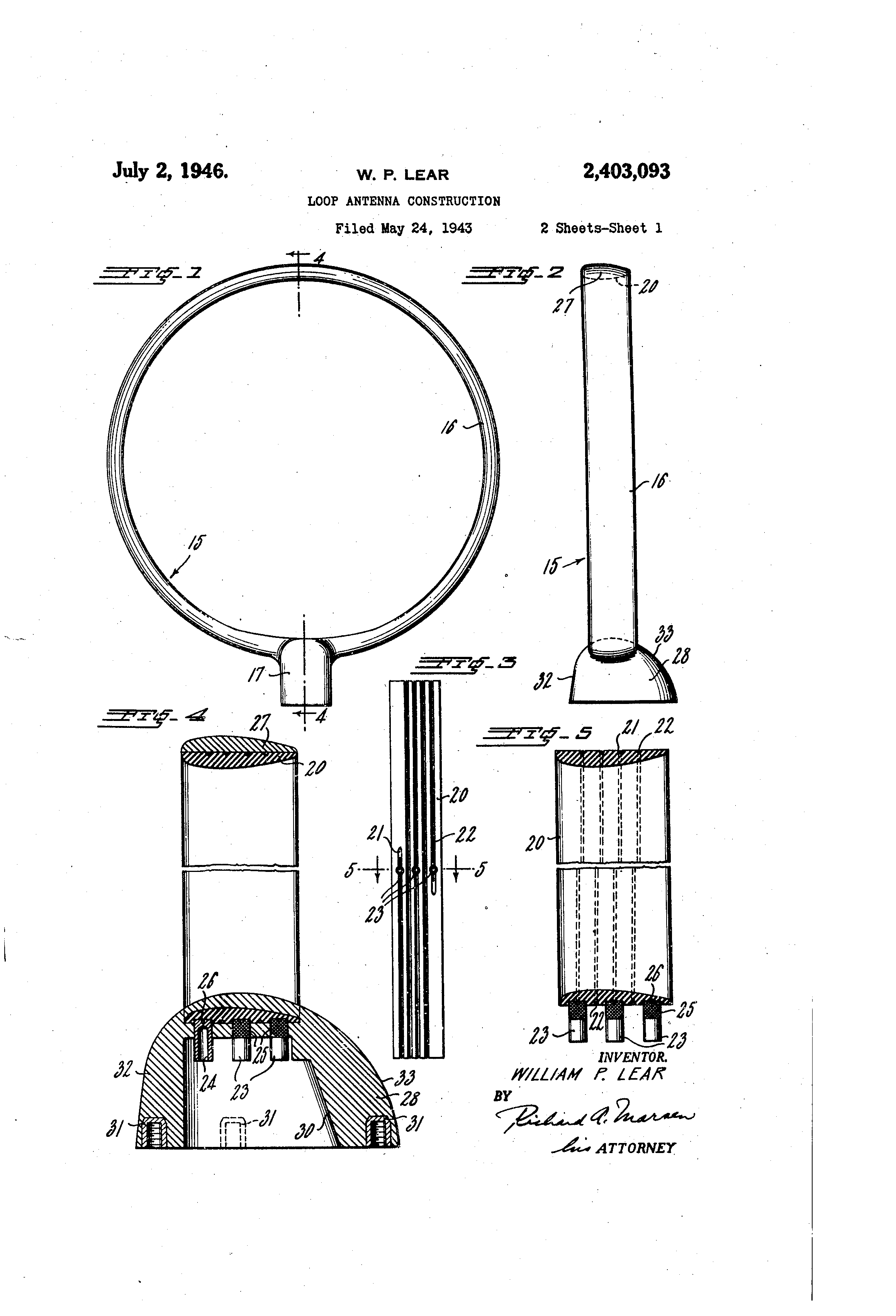
Lear opened a Grand Rapids plant in 1943 and incorporated Lear, Inc. there the next year, making aircraft radios, direction finders and flight controls. After its C-2 autopilot of 1947, the company developed the F-5, a lightweight autopilot for jets with automatic approach capability. Lear received the Collier Trophy for the work. He later created the Learjet and the 8-track tape.

1949
Lear F-5 Autopilot
William P. Lear, loop antenna construction, U.S. Patent 2,403,093 (filed 1943), assigned to Lear, Incorporated, Grand Rapids. Public domain.

Bill Lear's Grand Rapids company built a light autopilot for jet aircraft that could also fly an automatic approach, winning him the Collier Trophy.

Source ↗
Bill Lear
bill-lear
Inventor
Butterball Farms
·
Grand Rapids (Buchanan Avenue SW)

Butterball Butter Premium Balls

The Butterball that isn't a turkey

Leo Peters bought the Butterball trademark from Ada Walker of Wyoming, Ohio, on February 16, 1951, and founded Peters Pak on Wealthy Street in 1956, moving to Buchanan Avenue in 1963. Embossed butter roses for restaurants began in the mid-1960s; in the late 1960s he sold the Butterball turkey business but kept the right to license the name. In 1972 McDonald's started buying embossed pats for its hotcakes, and sales passed $1 million. Renamed Butterball Farms in 1983, the company was the first U.S. dairy to freeze product in a freeze tunnel, developed the Butter Premium Balls in 1997, 3D holiday shapes in 2003 and flavored butters, added robotics in 2019 and, since 2024, sauces, marinades and gravies. Mark Peters has led it since his father's death in 1995.

1956
Butterball Butter Premium Balls
Butterball Butter Premium Balls. Photo: Butterball Farms, Inc.

Leo Peters bought the Butterball name in 1951, sold the turkey business but kept the trademark, and turned a Grand Rapids butter company into the maker of embossed pats, roses and Premium Balls.

Source ↗
Leo Peters
leo-peters
Inventor & founder, Butterball Farms
Mark Peters
mark-peters
CEO, Butterball Farms
Wolverine World Wide
·
Rockford (Greater Grand Rapids)

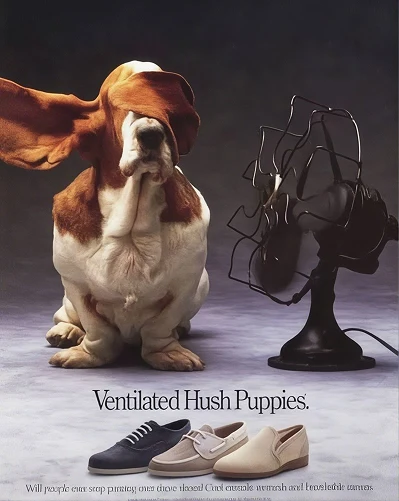
Hush Puppies

Pigskin goes suburban

Wolverine had developed a way to tan pigskin, but the leather was too soft for work boots. The company made relaxed casual shoes for the new suburbs instead and marketed them with a droopy basset hound. It sold a million pairs by 1959.

1958
Hush Puppies
"Ventilated Hush Puppies" print ad. Wolverine World Wide.

Wolverine turned its pigskin tanning know-how into soft casual shoes, and the basset-hound brand became a postwar hit.

Source ↗
Victor Krause
victor-krause
Tanning innovator
Jim Muir
jim-muir
Named Hush Puppies
Adolph Krause
adolph-krause
President, Wolverine
X-Rite
·
Grandville (Greater Grand Rapids)

X-Rite Color Instruments

Measuring color exactly

D. Ted Thompson and six fellow engineers from Lear Siegler incorporated X-Rite on Christmas Eve 1958. Their first product, sold from 1961, was a light-opaque silver tape that let nurses label X-ray film. A densitometer for the printing trade followed in 1975, then a low-cost spectrocolorimeter in 1989, a multi-angle instrument for metallic paint in 1991 and paint-matching machines for hardware stores. From Grandville the company grew into a world leader in color measurement.

1958
X-Rite Color Instruments

Seven Lear Siegler engineers started X-Rite in 1958; its X-ray labeling tape led to the densitometers and spectrophotometers used worldwide.

Source ↗
D. Ted Thompson
d-ted-thompson
Co-founder, X-Rite
Amway
·
Ada (Greater Grand Rapids)

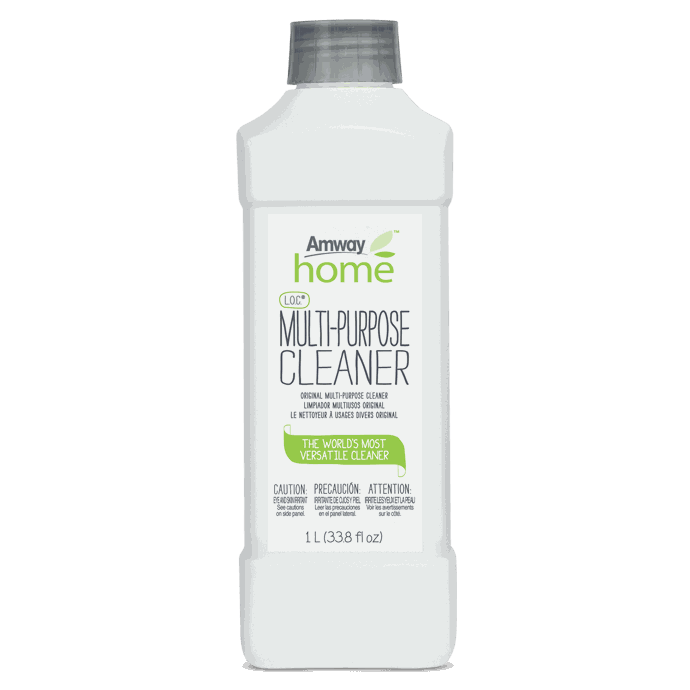
Amway L.O.C. Cleaner

A soap that started a sales empire

Rich DeVos and Jay Van Andel met at Grand Rapids Christian High School and spent the 1950s selling Nutrilite supplements. In 1959 they founded Amway in Ada. They bought the rights to Frisk, a biodegradable liquid cleaner developed by a scientist in Ohio, and renamed it L.O.C. With the detergent SA-8 that followed, it made Amway known as a soap company before it grew into a worldwide business.

1959
Amway L.O.C. Cleaner
Amway Home L.O.C. Multi-Purpose Cleaner. Photo: Amway.

Amway's first product was a biodegradable liquid cleaner, first sold as Frisk and renamed L.O.C.

Source ↗
Rich DeVos
rich-devos
Co-founder, Amway
Jay Van Andel
jay-van-andel
Co-founder, Amway
Meijer
·
Grand Rapids (28th Street SE)

Meijer Thrifty Acres

Groceries and everything else

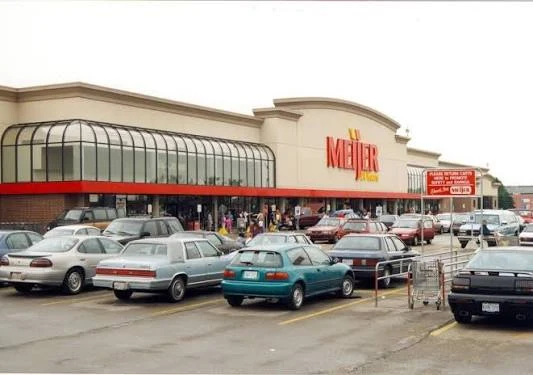
Hendrik Meijer opened a small grocery in Greenville in 1934, and with his son Fred grew it into a supermarket chain. On June 5, 1962 they opened Thrifty Acres at 28th Street and Kalamazoo Avenue in Grand Rapids: food and general merchandise in one store with a single checkout. The one-stop format became the model for supercenters across the country.

1962
Meijer Thrifty Acres
A Meijer store, 1990s.

Hendrik and Fred Meijer put a supermarket and a discount department store under one roof, with one checkout, creating the supercenter.

Source ↗
Fred Meijer
fred-meijer
Co-founder & chairman, Meijer
Hendrik Meijer
hendrik-meijer
Founder, Meijer
Hekman Biscuit Co. (Keebler) for Kellogg's
·
Grand Rapids (28th Street SE)

Pop-Tarts

Breakfast from the toaster

In April 1964 a Kellogg's vice president came to the Hekman bakery looking for someone to make a filled pastry that could go in a toaster. Plant manager Bill Post said yes on a handshake. Within four weeks handmade samples, first called Fruit Scones, were coming off the Grand Rapids line; Post's crew solved the exploding-filling problem by pricking the tops. Named for Pop Art, Pop-Tarts went on sale in Cleveland on September 14, 1964, in strawberry, blueberry, apple currant and cinnamon sugar. The first 45,000 cases of each sold out in months, and the plant ran three shifts to keep up. Frosted versions followed in 1967.

1964
Pop-Tarts
Frosted Pop-Tart.

The first Pop-Tarts were developed and baked at the Hekman plant on 28th Street after a handshake deal with Kellogg's in 1964.

Source ↗
Bill Post
bill-post
Bakery manager who made Pop-Tarts
Zondervan
·
Grand Rapids

The NIV Bible

A Bible from a Grandville farmhouse

Pat and Bernie Zondervan began selling religious books from their mother's farmhouse in Grandville in 1931, opened a Grand Rapids bookstore in 1932 and printed their first titles in 1933. In 1971 the company backed a new English translation by the International Bible Society, publishing the New Testament in 1973 and the full New International Version in 1978. The NIV quickly became the second-best-selling Bible in America and passed the King James Version in 1986. Zondervan joined HarperCollins in 1988 and still publishes from Grand Rapids.

1978
The NIV Bible
Holy Bible, New International Version, Zondervan hardcover. Photo: Zondervan.

Zondervan, started by two brothers in 1931, published the New International Version in 1978; by 1986 it outsold the King James.

Source ↗
Pat Zondervan
pat-zondervan
Co-founder, Zondervan
Bernie Zondervan
bernie-zondervan
Co-founder, Zondervan
Cascade Engineering
·
Grand Rapids

The Roll-Out Refuse Cart

The cart at the curb

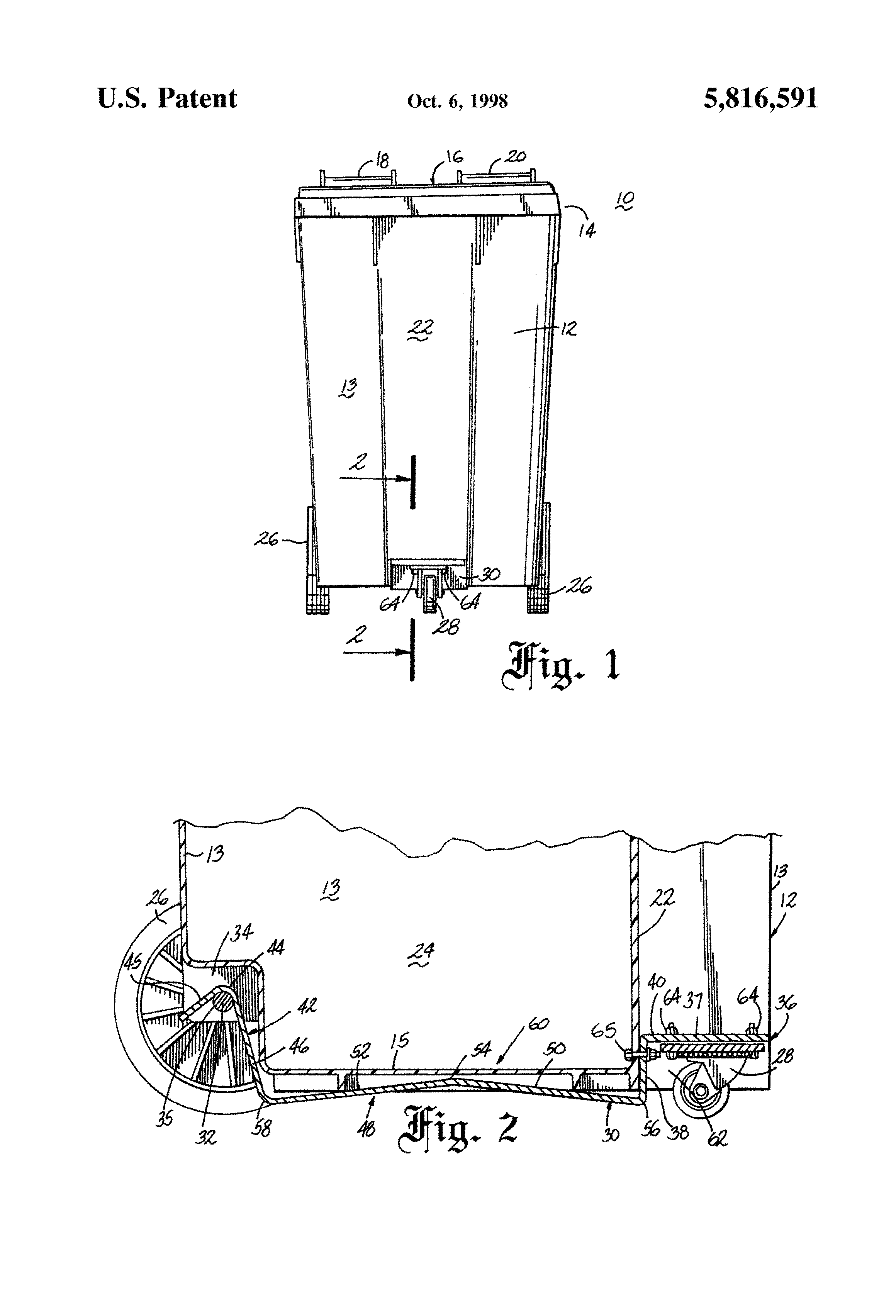
Fred Keller started Cascade Engineering in 1973 as a mold tryout department within Paragon Die and Engineering. The large-tonnage injection molder won its first automotive job, an air-conditioning duct for Oldsmobile, in 1978 and began molding office furniture parts with Herman Miller in 1985. In 1989 it formed the Container Group to make roll-out waste and recycling carts; a 1998 patent by Cascade engineers added a brace under the bin so it would not buckle under loads of more than 300 pounds. Now Cascade Cart Solutions, the business makes 35-, 64- and 96-gallon carts with recycled content and introduced the Pink Cart for breast cancer awareness in 2010, the year the Grand Rapids campus reached zero waste to landfill. Christina Keller, the family's second generation, became CEO and chair in 2018.

1989
The Roll-Out Refuse Cart
Brian G. Parker, Chadwick L. Van Sweden and Robert J. Turnbull for Cascade Engineering, refuse container, U.S. Patent 5,816,591 (filed 1996, granted 1998). Public domain.

Cascade Engineering, a Grand Rapids plastics molder founded in 1973, started making wheeled waste and recycling carts in 1989 and became one of the largest cart makers in North America.

Source ↗
Fred P. Keller
fred-p-keller
Founder, Cascade Engineering
Christina Keller
christina-keller
CEO, Cascade Engineering
Steelcase
·
Kentwood (Greater Grand Rapids)

The Leap Chair

A chair that moves with you

Steelcase spent years studying how people sit and found they shift posture constantly. The Leap's LiveBack backrest flexes to follow the spine instead of holding a fixed shape, and it became one of the most widely used ergonomic chairs.

1999
The Leap Chair
Steelcase Leap. Photo: Steelcase.

Research into how people really sit produced the Leap, whose backrest changes shape as the sitter's spine moves.

Source ↗
Glenn A. Knoblock
glenn-a-knoblock
Inventor
Howies Hockey
·
Grand Rapids

Howies Hockey Tape

The tape on the pros' sticks

Max “Howie” Sieplinga grew up in Grand Rapids and played at Calvin, where he won a Division III national title in 2003–04 and was named national player of the year. Convinced hockey tape could be better, he and his father started Howies in 2002, testing materials for a season and selling by cold call; a men's-league teammate's introduction to the Grand Rapids Griffins' equipment manager was the first big break. By 2015 Howies supplied 19 NHL teams and most of the AHL, and it now ships tape, laces and gear to six continents. Its gap-toothed, black-eyed mascot is painted on the Michigan Street building that was once his father's photography studio.

2002
Howies Hockey Tape
Howies tape tin with clear, white and black rolls. Photo: Howies Hockey.

Started in 2002 out of a one-room storage unit on Grand Rapids' north side, Howies tape is now wrapped on sticks across the NHL, AHL and college hockey.

Source ↗
Max Sieplinga
max-sieplinga
Founder, Howies Hockey
Universal Forest Products (UFP Industries)
·
Grand Rapids (East Beltline Avenue NE)

The Folding Roof Truss

A roof that folds for the road

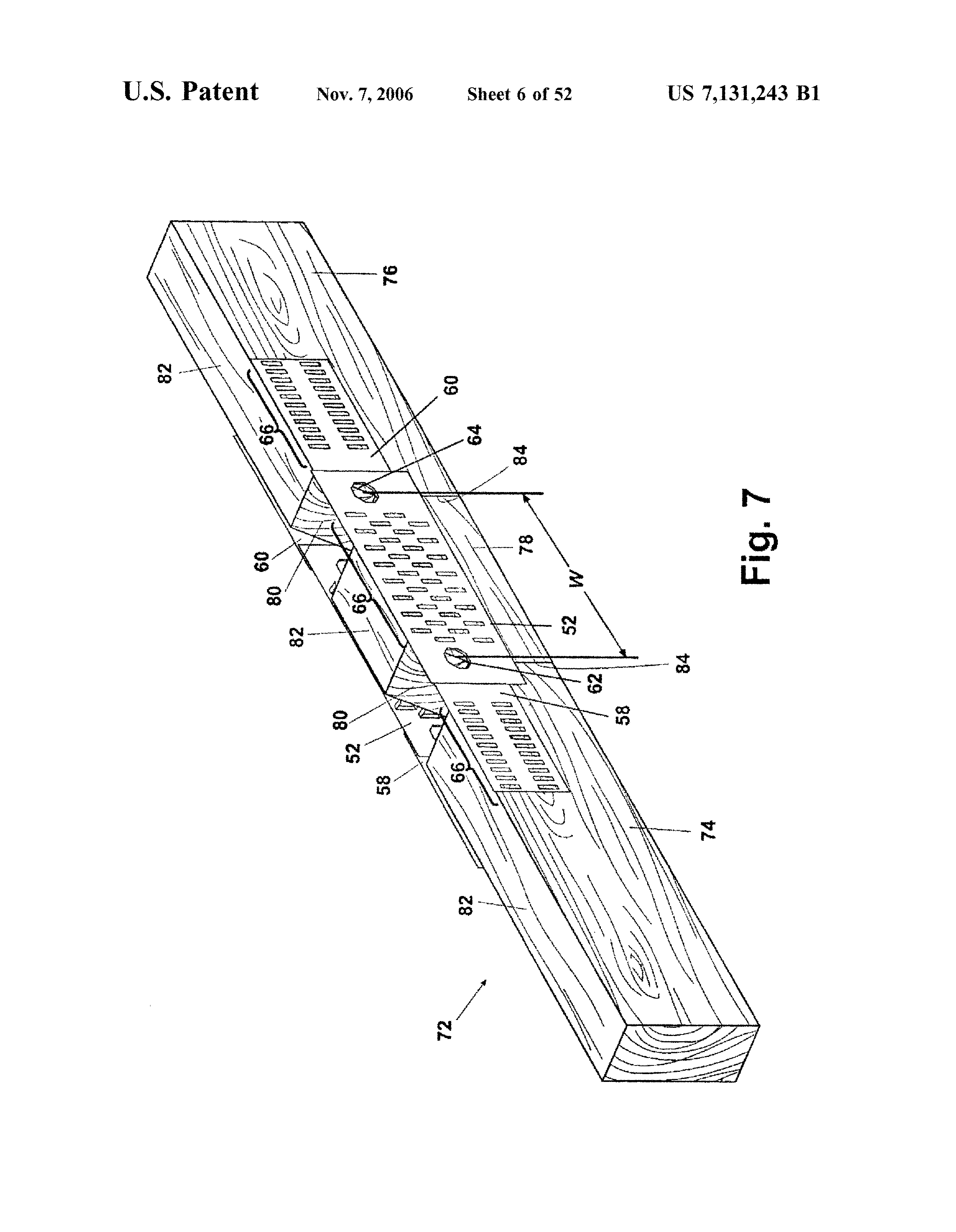
Universal Forest Products was incorporated in Grand Rapids in 1955, with William F. Grant as major stockholder and only salesman, supplying lumber to the factory-built housing industry. Peter Secchia joined in 1962 and bought control in 1971, when sales reached $12 million. In 1978 the company treated its first charge of lumber at Auburndale, Florida, and in 1979 shipped the first load of treated lumber to a new retailer, The Home Depot; it grew into one of the world's largest pressure-treaters. It went public in 1993 and became a major truss maker after buying Shoffner Industries in 1998. U.S. Patent 7,131,243, granted in 2006 to engineer John Sirowatka, covers a double-hinge plate that lets a manufactured home's roof truss fold for transport and open on site without extra bracing. The company became UFP Industries in 2020 and is still headquartered on East Beltline in Grand Rapids.

2006
The Folding Roof Truss
John Sirowatka for Universal Forest Products, double-hinge plate and foldable truss, U.S. Patent 7,131,243 (filed 2003, granted 2006). Public domain.

Universal Forest Products began in Grand Rapids in 1955 selling lumber to builders of factory-made houses. Half a century later it patented a hinged truss that lets a manufactured home's steep roof fold down for the highway.

Source ↗
William F. Grant
william-f-grant
Founder, Universal Forest Products
Peter F. Secchia
peter-f-secchia
Chairman, Universal Forest Products
John Sirowatka
john-sirowatka
Inventor, Universal Forest Products
Founders Brewing Co.
·
Grand Rapids

All Day IPA

Beer City's flagship

Brewmaster Jeremy Kosmicki spent years and more than 20 recipe versions chasing full IPA flavor at lower strength. Brewed downtown, All Day IPA went on year-round sale in February 2012 and grew to more than half of Founders' volume.

2012
All Day IPA
Founders All Day IPA can. Photo: Founders Brewing Co.

Founders released its 4.7% session IPA year-round in 2012, and it became the brewery's flagship.

Source ↗
Jeremy Kosmicki
jeremy-kosmicki
Brewmaster, Founders
Autocam Medical
·
Kentwood (Greater Grand Rapids)

Autocam Medical Implants & Instruments

Precision parts for surgery

John C. Kennedy bought Autocam in 1988, a one-customer shop making fuel-injection parts, and grew it into a precision-machining group. When the automotive side was sold in 2014 he kept the medical business as Autocam Medical, based in Kentwood. It makes drill bits, drivers, bone screws, plates and complex implants for orthopedic, spine, robotic and eye-surgery companies, and has grown from about $30 million in sales to nearly $200 million, with plants in Tennessee, Massachusetts, China and Brazil.

2014
Autocam Medical Implants & Instruments
Machined surgical instruments, screws and plates. Photo: Autocam Medical.

Spun out of John Kennedy's Autocam in 2014, Autocam Medical machines screws, plates, drills and implants for surgical device makers from Kentwood.

Source ↗
John C. Kennedy
john-c-kennedy
Founder, Autocam
Nightjar Sauna and Cold Plunge
·
Grand Rapids (Burton Street SE)

Nightjar Sauna

Sauna every day

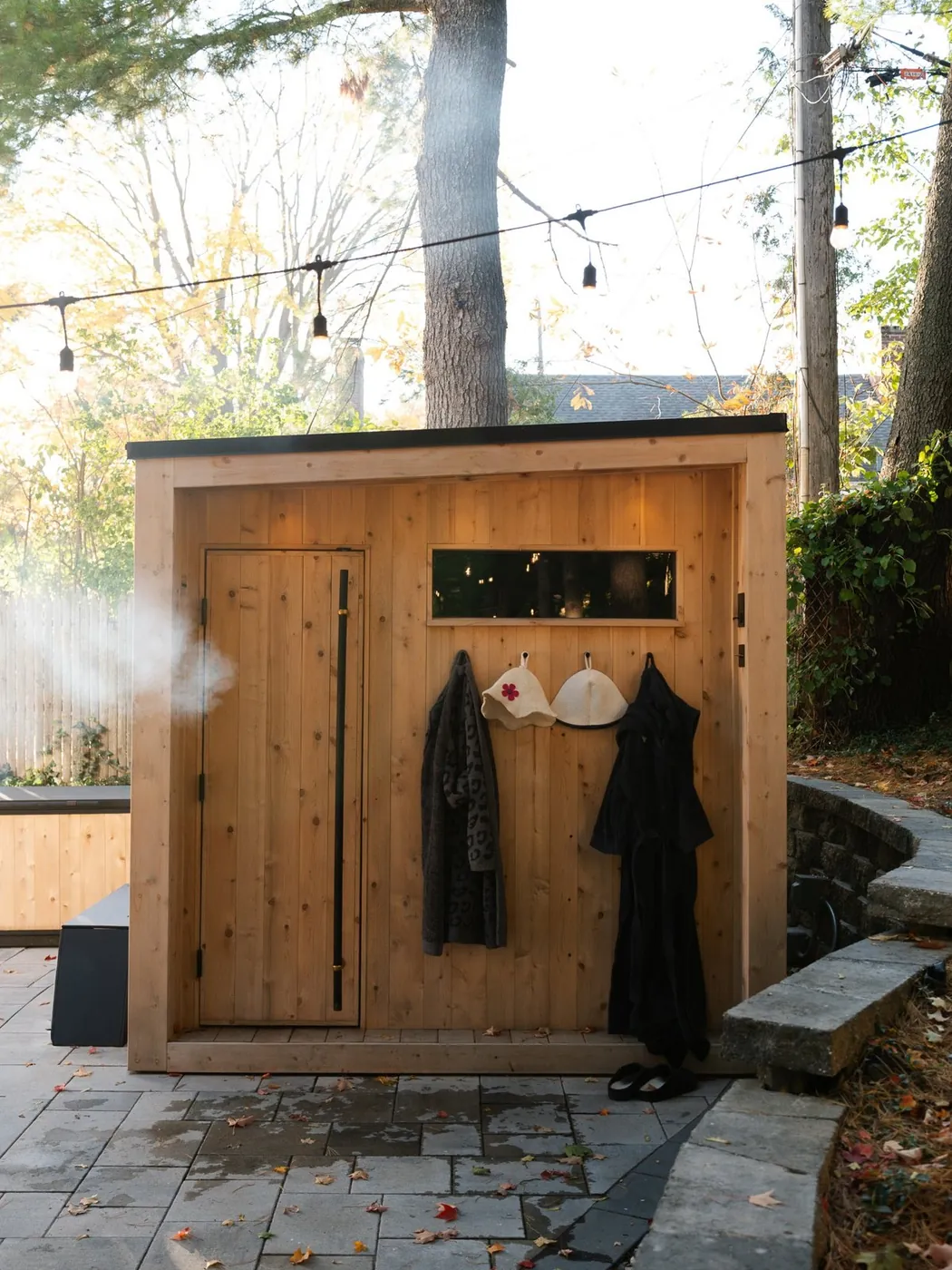
David Stoffer, a high-end remodeler, built a sauna for himself and in March 2023 turned it into Nightjar. Each sauna is built by hand in Grand Rapids from Michigan Grade A cedar around a Finnish stove, with the ventilation and insulation that make a proper hot, fresh-aired room, and ships fully assembled. A matching cedar cold plunge completes the contrast-therapy pair. Sales doubled in 2025, the shop moved from Wyoming into a 15,000-square-foot building on Burton Street SE, and Nightjar Sauna Club, the city's first sauna and cold plunge club with a 50-person communal sauna, is opening on Lake Eastbrook Boulevard.

2023
Nightjar Sauna
A Nightjar cedar sauna. Photo: Nightjar Sauna.

Hand-built cedar saunas and cold plunges from a Grand Rapids workshop, delivered fully assembled anywhere in the country.

Source ↗
David Stoffer
david-stoffer
Founder, Nightjar Sauna